Five Years of Computational Biomedicine at Cedars-Sinai
Date
July 21, 2026
Credits

Date
July 21, 2026
Credits
Medical providers featured in this article
In Brief
- The Department of Computational Biomedicine has grown into an institution-wide collaborative hub, connecting computational scientists with clinicians and researchers across Cedars-Sinai.
- In just five years, the department launched one of the nation’s first PhD in Health AI programs and built high-performance computing infrastructure to support large-scale biomedical research.
- Investigators are using emerging AI-driven tools to accelerate scientific discovery, helping to produce experimentally validated findings in days rather than months.
Medical care is becoming increasingly personal, requiring breakthroughs that are precise at the level of genes, cells and molecular machinery. Understanding human biology on that scale requires oceans of data and the computational power to make sense of it.
The Cedars-Sinai Department of Computational Biomedicine was born just ahead of this tidal wave of change. In its first five years, its leaders have cultivated a collaborative ecosystem for computational scientists, clinicians and investigators—developing new tools, expanding access to data resources and accelerating discovery.
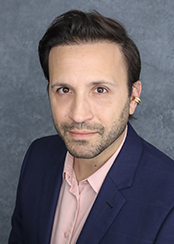
Their efforts have reshaped computational infrastructure, forged scientific partnerships and founded the necessary educational programs to support a rapidly evolving era of biomedical research—one where discoveries that once took years increasingly happen in days, said Jason Moore, PhD, the department’s inaugural chair.
“We built our department just as AI was transforming biomedical research,” Moore said. “Because we invested early in AI and computational science, we are now positioned to move faster, collaborate more broadly and rethink how research moves from biology to breakthroughs.”
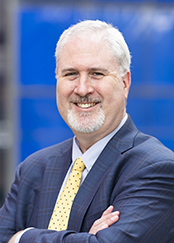
And since 2021, the technology has transformed from a supporting discipline into a core driver of discovery and patient care, said Nicholas Tatonetti, PhD, vice chair of operations in Computational Biomedicine.
“We are now able to connect molecular data, clinical data, and AI in ways that were unimaginable when the department began,” Tatonetti said. “I believe the next decade will be defined by our ability to translate these advances into tools and insights that directly improve the lives of patients.”
{{providers}}
{{cta-block}}
Recruited Diverse Interdisciplinary Faculty
The Department of Computational Biomedicine’s expertise spans quantitative disciplines, creating a scientific powerhouse that enhances inquiries across the healthcare system. The department includes 20 primary faculty, with 14 new recruits in the past five years.
“Each of our faculty members brings new methods and new science that helps Cedars-Sinai remain a leader in innovation,” Moore said.
Launched One of the First PhD in Health AI Programs in the U.S.
AI increasingly influences nearly every aspect of healthcare and biomedical research. To shape the future healthcare workforce, Department of Computational Biomedicine faculty developed one of the first PhD in Health AI programs in the nation. The first class started in 2025.
“Students are the creative and innovative engine of any scientific program,” Moore said.
A rich culture of innovation and collaboration that embraces emerging technologies helped make the program possible.
“AI isn’t something we do on top of medicine,” said Graciela Gonzalez-Hernandez, PhD, MS, vice chair of Research and Education and director of Graduate Programs in Health Artificial Intelligence. “The expertise and creativity of clinicians and scientists that drives our research collaborations enabled us to successfully launch our Health AI PhD program.”
Integrated Computational Science Across the Institution
Seamless integration into the healthcare system was a defining goal as the program developed.
“I’m in awe of the collaborations we’ve built and the kinds of questions we can now address together across Cedars-Sinai,” Graciela Gonzalez-Hernandez said. “The combination of human knowledge and computational methods allows us to see patterns in real-world data that were invisible just a few years ago.”
Built a Foundation for AI-Driven Research
In collaboration with Cedars-Sinai Enterprise Information Services, Department of Computational Biomedicine investigators developed high-performance computing and data infrastructure to support institution-wide research and rapidly evolving AI technologies.
The department created tools that help investigators identify and access complex biological datasets across the institution. For example, the Omics Search platform allows researchers to locate genomics and related data resources.
The infrastructure supports increasingly data-intensive forms of research, shortening the path from scientific insight to clinical innovation.
Accelerated the Pace of Scientific Discovery
Emerging forms of AI are automating portions of the research process. AI-driven workflows automate (and expedite) analytic processes previously performed manually.
Unlike large language models that require continuous user input, “agentic AI” systems autonomously execute complex work, such as cleaning data and analyzing results.
“I believe agentic AI will fundamentally democratize innovation in medicine by enabling clinicians and patients to become creators, not just users, of the technologies that improve health,” Tatonetti said. “That’s an incredibly exciting future for our field and for medical care.”